

Missed Period? When Doctors Say to Take a Pregnancy Test
Posted on Dec 09, 2025
Missed Your Period? When Doctors Say You Should Take a Pregnancy Test
Missing a period can bring a lot of emotions at once: worry, hope, stress, or confusion. Whether you want a positive result or are scared of one, the big question is the same:
“When should I take a pregnancy test so I can trust the result?”
Many people test too early and get a false negative, then spend days feeling unsure. Doctors strongly advise understanding your cycle, your symptoms, and how pregnancy tests work before you use one.
This guide breaks everything down in simple language:
- Early signs of pregnancy
- What happens in your body after conception
- Exact timing doctors recommend for testing
- Why some tests show false negatives or false positives
- When a missed period is not about pregnancy
- When to see a doctor or get a lab blood test
This article is for general information only. Always talk to a qualified doctor for personal medical advice.
On ARACO, you can also get:
- Free doctor consultation (tele/clinic based as per your setup)
- Lab pregnancy tests and related hormone tests
Early Signs of Pregnancy: What You Might Notice First

Early pregnancy often feels very similar to PMS, which is why it’s so hard to judge based on symptoms alone.
Some common early signs include:
- Breast tenderness or fullness – Breasts may feel heavier, sore, or more sensitive due to rising estrogen and progesterone.
- Extreme tiredness – You may feel unusually exhausted, even after a full night’s sleep. Early pregnancy increases blood production and hormonal changes, which drain your energy.
- Nausea or “morning sickness” – Can happen at any time of day. It’s linked to the hormone hCG, which is what pregnancy tests detect.
- Light spotting (implantation bleeding) – Light pink or brown spotting 6–12 days after ovulation, when the fertilized egg attaches to the uterus. Many people confuse this with a very light period.
- Mild cramping – Similar to period cramps, but sometimes lighter or different in pattern.
- Increased urination – Needing to pee more often, especially at night.
- Mood swings, food cravings, or aversions
- Heightened sense of smell
Important reality check:
- You can have many symptoms and not be pregnant.
- You can have almost no symptoms and still be pregnant.
That’s why doctors advise you to focus on timing and testing, not symptoms alone.
What Happens in Your Body After Conception
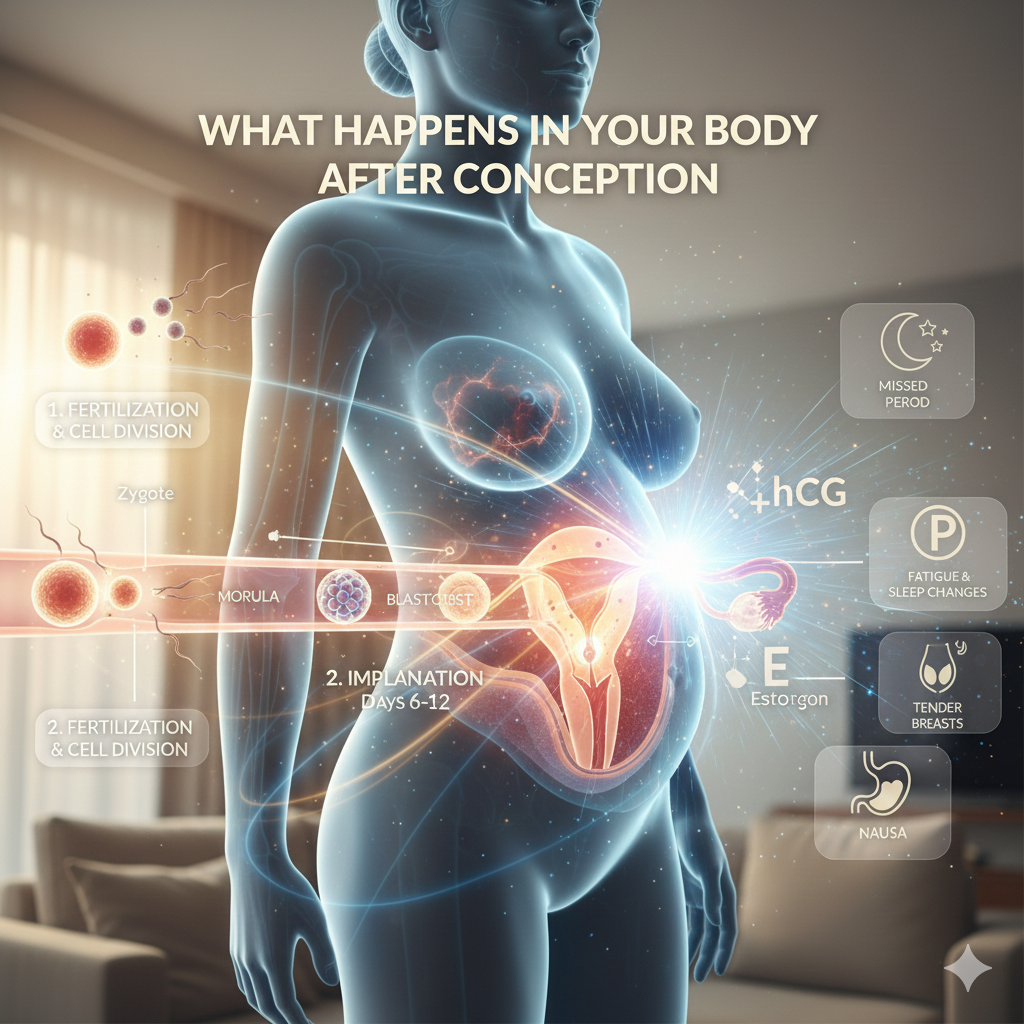
Once sperm fertilizes an egg, a whole chain of changes begins in your body.
Step 1: Fertilization and travel
- The fertilized egg (zygote) starts dividing into multiple cells.
- It travels through the fallopian tube towards the uterus over 3–5 days.
Step 2: Implantation
- Around 6–12 days after ovulation, the embryo attaches to the uterine lining.
- This is called implantation and is the true start of pregnancy medically.
- This is also when your body begins producing hCG (human chorionic gonadotropin).
Step 3: Hormones rise
- hCG levels begin to rise quickly, doubling roughly every 48–72 hours in a healthy early pregnancy.
- hCG tells the body to stop shedding the uterine lining, which is why your period doesn’t come.
- The corpus luteum (a temporary gland) produces more progesterone to support the pregnancy.
- Progesterone contributes to symptoms like breast pain, bloating, tiredness, and mood changes.
Step 4: Increased blood flow
Your heart starts working harder, and blood volume increases to support the developing embryo. This can cause fatigue, dizziness, or feeling “off.”
Even though all of this is happening inside, pregnancy tests cannot detect hCG immediately. The hormone needs time to rise to a detectable level. Testing too early can easily give you a false negative.
When Do Doctors Recommend Taking a Pregnancy Test?
When Doctors Recommend Taking a Pregnancy Test

The most common question is:
“How long after a missed period should I test?”
Doctors usually recommend:
- If your cycle is regular:
Test 7 days (1 week) after your missed period for the most reliable result. - If your cycle is irregular:
Test at least 14 days after you think you ovulated. - If you had unprotected sex and don’t know your ovulation date:
Test 21 days (3 weeks) after intercourse for high accuracy.
Why this timing?
- People ovulate at different times.
- Implantation can happen earlier or later.
- hCG levels rise at different speeds from person to person.
Testing too soon, even with a sensitive test, can show negative even if you’re actually pregnant.
When doctors may suggest testing earlier
You might consider testing earlier if:
- You have strong early pregnancy symptoms
- You notice unusual spotting or possible implantation bleeding
- You have a history of irregular or unpredictable periods
- You’re actively trying to conceive and tracking ovulation
Just remember: an early negative doesn’t always mean “not pregnant” – it often means “too early.”
How Pregnancy Tests Work (Urine vs Blood)
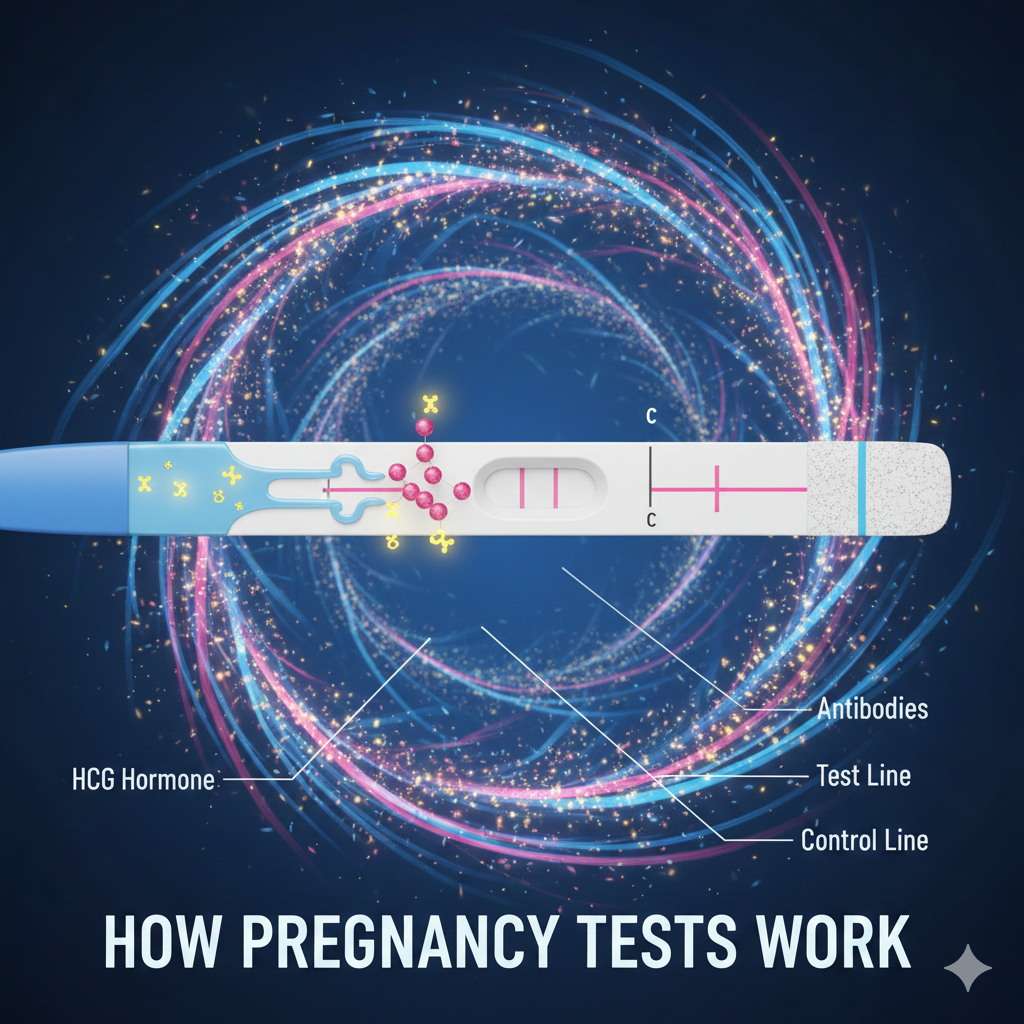
Pregnancy tests look for hCG, the hormone your body produces during pregnancy.
Home urine pregnancy tests
These are the ones you buy from a pharmacy.
- Contain special antibodies that bind to hCG in your urine.
- When hCG is present above the test’s threshold, a line or symbol appears.
- Different brands have different sensitivity levels (e.g., 10–25 mIU/mL).
They are:
- Easy to use
- Non-invasive
- Most accurate after a missed period
Blood pregnancy tests (lab tests)
Done in a diagnostic lab or hospital. Two types:
- Qualitative hCG – Yes/No answer: pregnant or not pregnant
- Quantitative beta hCG – Exact number showing how much hCG is in your blood
Blood tests:
- Detect very low levels of hCG (as low as 1–5 mIU/mL)
- Can confirm pregnancy earlier than urine tests
- Help monitor early pregnancy, especially in high-risk cases
- Are essential for checking suspected ectopic pregnancy or early miscarriage
In ARACO Diagnostic, you can highlight:
- Beta hCG blood test for accurate confirmation
- Follow-up testing under doctor supervision
Best Time of Day to Take a Pregnancy Test

Doctors often recommend testing first thing in the morning, especially if:
- You’re testing before or just after your missed period
- You’ve had a very early suspected conception
Why morning is better:
- Urine is more concentrated after sleeping
- hCG levels are easier to detect in concentrated urine
- Less chance of a false negative due to dilution
Tips for better accuracy:
- Use first-morning urine for your first test after a missed period.
- Avoid drinking lots of water right before testing.
- If the test is negative but your period still doesn’t come, repeat the test in 48–72 hours.
Once you are several days past your missed period, time of day matters less, because hCG is usually much higher.
Doctor-Recommended Timing for the Most Accurate Result
In general, doctors agree:
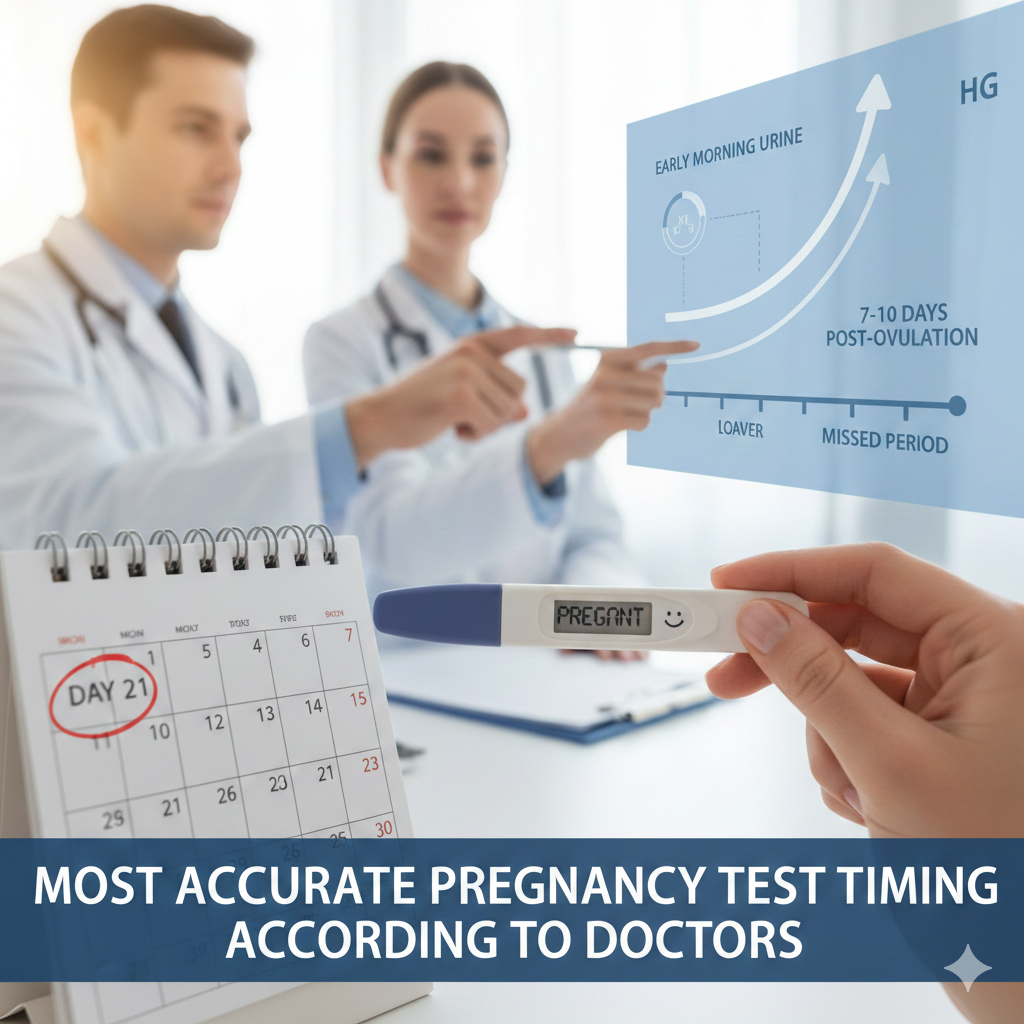
- The most accurate time to test is 1 week after your missed period, or
- At least 14 days after ovulation / possible conception
Here’s a simple timing guide:
- 3–4 days before period is due:
Very unreliable, high risk of false negatives. - On the day of your missed period:
Better, but still not 100% accurate for everyone. - 3 days after missed period:
Good chance of an accurate result. - 7 days after missed period:
Best balance of accuracy and convenience for most people. - 14 days after unprotected intercourse:
Strongly recommended for irregular cycles.
Waiting a few extra days can save you test strips, stress, and second-guessing.
Early Detection Test vs Standard Pregnancy Test
Many pharmacy tests advertise “early detection”.
Early detection tests
- Detect lower levels of hCG (around 10 mIU/mL).
- May show a positive result a few days before your expected period.
- However, they have a higher chance of showing a false negative if your hCG is still very low.
Standard pregnancy tests
- Usually detect 20–25 mIU/mL of hCG.
- Designed to be used after your missed period.
- More stable and reliable once your period is late.
Doctors usually recommend:
- If you use an early detection test, repeat a standard test a few days after your missed period.
- Don’t rely on a very early negative test as final proof.
Symptoms That Mean You Should Test Soon
You should consider testing as soon as practical if you:
- Missed your period, even by a few days
- Have persistent nausea or vomiting
- Feel unusually tired or sleepy all the time
- Notice breast tenderness that feels different from your usual PMS
- Need to urinate far more often than normal
- Experience light spotting that doesn’t feel like your regular period
- Have strong food aversions, new cravings, or smell sensitivity
If you have two or more of these symptoms and unprotected intercourse in your recent cycle, it is reasonable to take a test.
If the first test is negative but symptoms continue:
- Retest after 48–72 hours, or
- Talk to a doctor or get a lab blood test for clarity.
Why False Negative Pregnancy Tests Happen
A false negative means the test says “not pregnant” when you actually are pregnant.
Common reasons:
- Testing too early
- hCG hasn’t reached the test’s detection level yet.
- Late ovulation or implantation can push the timeline back.
- Diluted urine
- Drinking a lot of fluids before testing lowers hCG concentration.
- This is why first-morning urine is preferred.
- Incorrect test use
- Not following instructions properly
- Not waiting the correct number of minutes
- Using an expired test
- Rare: Hook effect
- Extremely high hCG levels can sometimes overwhelm the test and cause a false negative.
- This is uncommon and usually happens later in pregnancy or in specific medical conditions.
What doctors usually suggest:
- If your test is negative but your period still hasn’t come, repeat the test after 2–3 days.
- If tests remain negative and your period is missing, see a doctor.
Why False Positive Pregnancy Tests Happen
False positives are less common than false negatives, but they do occur.
Possible causes:
- Recent miscarriage or chemical pregnancy
hCG can stay in your body for days or weeks after a pregnancy ends. - Evaporation lines
Faint grey or colorless lines that appear after the test has fully dried.
These are not true positives, which is why you should only read results within the recommended time on the instructions. - Certain medical conditions
Some ovarian cysts, hormonal disorders, or rare tumors can increase hCG. - Fertility medications containing hCG
If you’re on fertility treatment, you need to wait long enough after your last hCG injection before testing.
If you get a positive result:
- Repeat the test after 24–48 hours, or
- Confirm with a blood test and doctor consultation.
When You Need a Blood Pregnancy Test
Home tests are usually enough, but a blood test is recommended when:
- You’ve had multiple negative urine tests but strong pregnancy symptoms
- Your cycles are very irregular and dates are uncertain
- You had a faint positive test and want confirmation
- Your doctor wants to monitor early pregnancy closely
- You have a history of ectopic pregnancy, miscarriage, or fertility treatment
- There is concern about ectopic pregnancy or abnormal pregnancy
A quantitative beta hCG blood test:
- Detects very low hCG levels
- Shows exactly how fast hCG is rising
- Helps doctors check if the pregnancy is developing normally
If you’re offering this at ARACO Diagnostic, you can add a simple line like:
“At ARACO Diagnostic, you can do a beta hCG blood test with quick reporting and follow up with our doctors for next-step guidance.”
When a Missed Period Is Not Due to Pregnancy
A missed period does not automatically mean you’re pregnant.
Other common causes include:
- Stress and anxiety – High stress can delay or stop ovulation.
- Sudden weight loss or gain – Extreme dieting, over-exercise, or rapid weight change can affect estrogen levels and stop periods.
- Hormonal conditions – PCOS, thyroid problems, high prolactin, and other disorders often cause irregular or absent periods.
- Birth control use or withdrawal – Some contraceptives cause lighter periods, irregular cycles, or no bleeding at all.
- Recent illness, poor sleep, or travel – Changes in lifestyle, time zone, or illness can temporarily disturb cycles.
- Perimenopause – In your 40s or sometimes earlier, cycles can lengthen, shorten, or skip.
If you:
- Have missed more than 2–3 periods,
- Have negative pregnancy tests, and
- Notice cycle changes (too heavy, too light, very irregular),
then you should see a doctor or gynecologist for check-up and possible hormone tests.
Irregular Periods: How to Time Your Pregnancy Test
If your periods are irregular, it can be hard to know when a period is “late.”
Doctors usually advise:
- Test 3 weeks after unprotected intercourse for a more reliable result.
- If you track ovulation (with cervical mucus, ovulation kits, or basal temperature), test 14 days after your suspected ovulation date.
- If you have ongoing symptoms (nausea, breast changes, fatigue), you can test earlier and then repeat every 3–5 days if negative.
If you have PCOS or very unpredictable cycles, pregnancy detection can be trickier. In these cases, talking to a doctor and, if needed, using a blood test can give clearer answers.
How Soon Should You See a Doctor After a Positive Test?
For most people, doctors suggest:
- Schedule your first prenatal visit at 6–8 weeks of pregnancy, counting from the first day of your last period.
By around 6 weeks:
- An ultrasound often can confirm the pregnancy location (inside the uterus).
- Doctors can estimate gestational age and due date.
- They can check for early complications.
You should contact a doctor earlier than 6 weeks if:
- You have a history of miscarriage or ectopic pregnancy
- You have chronic conditions such as diabetes, thyroid disease, high blood pressure, or PCOS
- You’re on long-term medication that may affect pregnancy
- You have severe abdominal pain, shoulder pain, dizziness, heavy bleeding, or fainting (possible ectopic pregnancy – emergency)
If the pregnancy is unplanned and you’re unsure what to do, early medical consultation can help you understand your options safely.
Tips to Get the Most Accurate Home Pregnancy Test Result
To improve accuracy:
- Check the expiry date on the test.
- Use first-morning urine, especially if you’re testing early.
- Follow the instructions exactly (how long to hold in urine, how long before reading).
- Avoid drinking too much fluid before testing.
- Read the result within the recommended time window to avoid confusion with evaporation lines.
- If the line is very faint, repeat the test in 24–48 hours.
- If your period is over a week late but tests are negative, see a doctor.
When a Negative Test Still Needs Medical Attention
You should consider seeing a doctor even if the test is negative, if:
- Your period has been missing for more than 6 weeks
- You have strong pregnancy-like symptoms that don’t go away
- You have severe pelvic or abdominal pain, heavy bleeding, or dizziness
- You have a known hormone condition (PCOS, thyroid issues, etc.) and your cycles suddenly change
- You have been trying to conceive for more than 12 months (or 6 months if over 35)
In these cases, a doctor might:
- Order blood tests (hormones, thyroid, prolactin, beta hCG)
- Suggest an ultrasound
- Review your medication, lifestyle, and medical history
On ARACO, you can connect this with:
- Online or in-clinic doctor consultation
- Hormone test packages
- Pelvic ultrasound and reproductive health checkups
Conclusion
Missing a period can feel stressful, but knowing when to take a pregnancy test can make the situation clearer and less confusing.
Key points to remember:
- For regular cycles: test 1 week after your missed period.
- For irregular cycles: test 3 weeks after unprotected sex or 14 days after suspected ovulation.
- Use first-morning urine for the best chance of accuracy.
- False negatives are common when testing too early or with diluted urine.
- A missed period doesn’t always mean pregnancy; stress, hormones, weight changes, and medical conditions all play a role.
- If anything feels unusual, or your results don’t match your symptoms, talk to a doctor.
If you’re in Bangladesh and need clarity:
- Book a free doctor consultation through ARACO
- Do a lab urine or blood pregnancy test (beta hCG)
- Get professional advice instead of guessing alone
Your body is sending signals. The right test at the right time, plus proper medical guidance, can help you understand them confidently.
FAQs
1. How long after missing my period should I take a pregnancy test?
Most doctors recommend testing 7 days after your missed period for the most accurate result.
2. Can I get a false negative pregnancy test?
Yes. Testing too early, diluted urine, late ovulation, or late implantation can all lead to a false negative.
3. Should I take the test in the morning?
Yes, especially if you’re testing early. First-morning urine has the highest hCG concentration and improves accuracy.
4. When should I see a doctor after a positive test?
In general, schedule your first prenatal visit at 6–8 weeks of pregnancy. See a doctor sooner if you have pain, heavy bleeding, or a high-risk history.
5. Can stress cause a missed period even if I’m not pregnant?
Yes. High stress can affect hormones, delay ovulation, and cause missed or irregular periods.
If you want, I can next help you:
- Add internal links (e.g., to ARACO lab test pages)
- Shorten this into a Bangla + English mixed version
- Create social media captions to promote this blog on Facebook/Instagram.
You said:
Add internal links (e.g., to ARACO lab test pages)
ChatGPT said:
Thought for 51s
Great, let’s wire this blog up with ARACO internal links so it helps both SEO and conversions.
Below is the same SEO-friendly blog, now updated with internal links to:
- Doctor page: https://www.araco.com.bd/doctors/home
- Lab Test home: https://www.araco.com.bd/labtest/home
- Women’s Health Checkup Package (lab test): https://www.araco.com.bd/test/29/
- Blogs listing (health tips): https://www.araco.com.bd/blogs/
You can paste this directly into your blog editor (it’s in markdown-style links; most CMSs handle this fine or you can convert to HTML).
Missed Your Period? When Doctors Say You Should Take a Pregnancy Test
Missing a period can bring a lot of emotions at once: worry, hope, stress, or confusion. Whether you want a positive result or are scared of one, the big question is the same:
“When should I take a pregnancy test so I can trust the result?”
Many people test too early and get a false negative, then spend days feeling unsure. Doctors strongly advise understanding your cycle, your symptoms, and how pregnancy tests work before you use one.
This guide breaks everything down in simple language:
- Early signs of pregnancy
- What happens in your body after conception
- Exact timing doctors recommend for testing
- Why some tests show false negatives or false positives
- When a missed period is not about pregnancy
- When to see a doctor or get a lab blood test
This article is for general information only. Always talk to a qualified doctor for personal medical advice.
If you’re in Bangladesh, you can:
- Get a free or low-cost online doctor consultation through ARACO’s doctor panel: Book a doctor consultation
- Book lab tests and health checkup packages online: Browse lab tests
- Read more practical health tips on our blog: ARACO Health Tips & Blogs
Early Signs of Pregnancy: What You Might Notice First
Early pregnancy often feels very similar to PMS, which is why it’s so hard to judge based on symptoms alone.
Some common early signs include:
- Breast tenderness or fullness – Breasts may feel heavier, sore, or more sensitive due to rising estrogen and progesterone.
- Extreme tiredness – You may feel unusually exhausted, even after a full night’s sleep. Early pregnancy increases blood production and hormonal changes, which drain your energy.
- Nausea or “morning sickness” – Can happen at any time of day. It’s linked to the hormone hCG, which is what pregnancy tests detect.
- Light spotting (implantation bleeding) – Light pink or brown spotting 6–12 days after ovulation, when the fertilized egg attaches to the uterus. Many people confuse this with a very light period.
- Mild cramping – Similar to period cramps, but sometimes lighter or different in pattern.
- Increased urination – Needing to pee more often, especially at night.
- Mood swings, food cravings, or aversions
- Heightened sense of smell
Reality check:
- You can have many symptoms and not be pregnant.
- You can have almost no symptoms and still be pregnant.
That’s why doctors advise you to focus on timing and testing, not symptoms alone.
If your symptoms feel unusual or worrying, you can consult a gynecologist or family physician online here:
See gynecologists and family physicians on ARACO
What Happens in Your Body After Conception
Once sperm fertilizes an egg, a whole chain of changes begins in your body.
Step 1: Fertilization and travel
- The fertilized egg (zygote) starts dividing into multiple cells.
- It travels through the fallopian tube towards the uterus over 3–5 days.
Step 2: Implantation
- Around 6–12 days after ovulation, the embryo attaches to the uterine lining.
- This is called implantation and is the true start of pregnancy medically.
- This is also when your body begins producing hCG (human chorionic gonadotropin).
Step 3: Hormones rise
- hCG levels begin to rise quickly, doubling roughly every 48–72 hours in a healthy early pregnancy.
- hCG tells the body to stop shedding the uterine lining, which is why your period doesn’t come.
- The corpus luteum produces more progesterone to support the pregnancy.
- Progesterone contributes to symptoms like breast pain, bloating, tiredness, and mood changes.
Step 4: Increased blood flow
Your heart starts working harder, and blood volume increases to support the developing embryo. This can cause fatigue, dizziness, or feeling “off.”
Even though all of this is happening, pregnancy tests cannot detect hCG immediately. The hormone needs time to rise to a detectable level. Testing too early can easily give you a false negative.
If you want hormone and basic health screening related to women’s health, you can book the Women’s Health Checkup Package here:
Women’s Health Checkup Package (CBC, TSH, Urine R/M/E, S. Ferritin, Pap Smear)
When Do Doctors Recommend Taking a Pregnancy Test?
The most common question is:
“How long after a missed period should I test?”
Doctors usually recommend:
- If your cycle is regular:
Test 7 days (1 week) after your missed period for the most reliable result. - If your cycle is irregular:
Test at least 14 days after you think you ovulated. - If you had unprotected sex and don’t know your ovulation date:
Test 21 days (3 weeks) after intercourse for high accuracy.
Why this timing?
- People ovulate at different times.
- Implantation can happen earlier or later.
- hCG levels rise at different speeds from person to person.
Testing too soon, even with a sensitive test, can show negative even if you’re actually pregnant.
If you’re unsure about your timing or cycle pattern, you can talk to a doctor online:
Get a quick doctor opinion on ARACO
How Pregnancy Tests Work (Urine vs Blood)
Pregnancy tests look for hCG, the hormone your body produces during pregnancy.
Home urine pregnancy tests
These are the ones you buy from a pharmacy.
- Contain special antibodies that bind to hCG in your urine.
- When hCG is present above the test’s threshold, a line or symbol appears.
- Different brands have different sensitivity levels (e.g., 10–25 mIU/mL).
They are:
- Easy to use
- Non-invasive
- Most accurate after a missed period
Blood pregnancy tests (lab tests)
Done in a diagnostic lab or hospital. Two types:
- Qualitative hCG – Yes/No answer: pregnant or not pregnant
- Quantitative beta hCG – Exact number showing how much hCG is in your blood
Blood tests:
- Detect very low levels of hCG
- Can confirm pregnancy earlier than urine tests
- Help monitor early pregnancy, especially in high-risk cases
- Are essential for checking suspected ectopic pregnancy or early miscarriage
You can browse ARACO lab test categories and health checkup packages here:
View all lab tests and health packages
For broader women’s health screening (thyroid, blood, urine, Pap smear), see:
Women’s Health Checkup Package – ARACO Diagnostic
Best Time of Day to Take a Pregnancy Test
Doctors often recommend testing first thing in the morning, especially if:
- You’re testing before or just after your missed period
- You’ve had a very early suspected conception
Why morning is better:
- Urine is more concentrated after sleeping
- hCG levels are easier to detect in concentrated urine
- Less chance of a false negative due to dilution
Tips for better accuracy:
- Use first-morning urine for your first test after a missed period.
- Avoid drinking lots of water right before testing.
- If the test is negative but your period still doesn’t come, repeat the test in 48–72 hours.
If you’re confused about your result and what to do next, book an online consultation:
Consult a doctor about late periods or test results
Doctor-Recommended Timing for the Most Accurate Result
In general, doctors agree:
- The most accurate time to test is 1 week after your missed period, or
- At least 14 days after ovulation / possible conception
Simple timing guide:
- 3–4 days before expected period: Very unreliable.
- On the day of your missed period: Better, but not perfect.
- 3 days after missed period: Good chance of accuracy.
- 7 days after missed period: Strong accuracy for most people.
- 14 days after unprotected intercourse: Helpful for irregular cycles.
Waiting a few extra days can save you test strips, stress, and second-guessing.
If you want a more complete health check while you’re at it, you can explore ARACO’s health checkup packages:
See health checkup and women’s packages
Early Detection Test vs Standard Pregnancy Test
Many pharmacy tests advertise “early detection”.
Early detection tests
- Detect lower levels of hCG (around 10 mIU/mL).
- May show a positive result a few days before your expected period.
- Have a higher chance of false negatives if your hCG is still very low.
Standard pregnancy tests
- Usually detect 20–25 mIU/mL of hCG.
- Designed to be used after your missed period.
- More stable and reliable once your period is late.
If an early detection test is negative but you still suspect pregnancy, repeat testing or discuss next steps with a doctor:
Talk to a doctor about pregnancy planning or concerns
Symptoms That Mean You Should Test Soon
You should consider testing as soon as practical if you:
- Missed your period, even by a few days
- Have persistent nausea or vomiting
- Feel unusually tired or sleepy all the time
- Notice breast tenderness that feels different from your usual PMS
- Need to urinate far more often than normal
- Experience light spotting that doesn’t feel like your regular period
- Have strong food aversions, new cravings, or smell sensitivity
If you have two or more of these symptoms plus unprotected intercourse in your recent cycle, it is reasonable to take a test.
If the first test is negative but symptoms continue, retest after 48–72 hours, or arrange a consultation here:
Book an online doctor visit
Why False Negative Pregnancy Tests Happen
A false negative means the test says “not pregnant” when you actually are pregnant.
Common reasons:
- Testing too early
- Diluted urine from drinking a lot of fluids
- Incorrect use – not following the instructions, using expired tests
- Rarely, the hook effect with very high hCG levels
If your test is negative but your period still hasn’t come, repeat the test after 2–3 days.
If your cycle remains unusual, you can combine a doctor consultation with lab work (like CBC, thyroid tests, urine tests, etc.). ARACO offers packages that cover multiple tests:
Explore health checkups and women’s diagnostic packages
Why False Positive Pregnancy Tests Happen
False positives are less common than false negatives, but they do occur.
Possible causes:
- Recent miscarriage or chemical pregnancy
- Evaporation lines when reading the test too late
- Certain medical conditions that raise hCG
- Fertility medications containing hCG
If you get a positive result:
- Repeat the test after 24–48 hours, and
- Confirm with a doctor or a lab blood test
You can get guidance, prescriptions, and follow-up options here:
Consult a doctor to confirm pregnancy
When You Need a Blood Pregnancy Test
Home tests are usually enough, but a blood test is recommended when:
- You’ve had multiple negative urine tests but strong pregnancy symptoms
- Your cycles are very irregular and dates are uncertain
- You had a faint positive test and want confirmation
- Your doctor wants to monitor early pregnancy closely
- You have a history of ectopic pregnancy, miscarriage, or fertility treatment
- There is concern about ectopic pregnancy or abnormal pregnancy
You can start by exploring ARACO lab tests and move to a doctor consultation with your report:
Book lab tests from home
When a Missed Period Is Not Due to Pregnancy
A missed period does not automatically mean you’re pregnant.
Other common causes:
- Stress and anxiety
- Sudden weight loss or gain
- PCOS and other hormonal conditions
- Thyroid disorders
- Birth control changes
- Illness, poor sleep, or travel
- Perimenopause
If you’ve missed more than 2–3 periods, pregnancy tests are negative, and your cycle feels different from usual, it’s time for a proper workup.
You can:
- Book a consultation with a relevant specialist:
See doctors by department and symptoms - Combine that with a women’s checkup package:
Women’s Health Checkup Package – ARACO
Irregular Periods: How to Time Your Pregnancy Test
If your periods are irregular, it can be hard to know when a period is “late.”
Doctors usually advise:
- Test 3 weeks after unprotected intercourse for a more reliable result.
- If you track ovulation, test 14 days after your suspected ovulation date.
- If you have ongoing symptoms, test and then repeat every 3–5 days if still negative.
If you have PCOS or very unpredictable cycles, it helps to work with both a doctor and structured lab testing.
You can:
- Consult doctors experienced with PCOS and irregular cycles:
Find a doctor for menstrual or hormonal issues - Use lab packages that check CBC, thyroid, ferritin, urine, and Pap smear:
Women’s Health Checkup Package
How Soon Should You See a Doctor After a Positive Test?
For most people, doctors suggest:
- Schedule your first prenatal visit at 6–8 weeks of pregnancy, counting from the first day of your last period.
You should contact a doctor earlier if:
- You have a history of ectopic pregnancy or miscarriage
- You have chronic conditions (diabetes, thyroid disease, high blood pressure, PCOS)
- You have severe abdominal pain, shoulder pain, heavy bleeding, or dizziness
To connect with a doctor and plan your next steps:
Book an online or in-person consultation
Tips to Get the Most Accurate Home Pregnancy Test Result
To improve accuracy:
- Check the expiry date on the test.
- Use first-morning urine if you’re testing early.
- Follow the instructions exactly.
- Avoid drinking too much fluid beforehand.
- Read the result within the time window on the box.
- If the line is faint, repeat in 24–48 hours.
- If your period is over a week late but tests are negative, see a doctor.
If you’d like a doctor to review your symptoms and test history, you can book online here:
Talk to a doctor about pregnancy test results
When a Negative Test Still Needs Medical Attention
You should consider seeing a doctor even if the test is negative, if:
- Your period has been missing for more than 6 weeks
- You have strong pregnancy-like symptoms that don’t go away
- You have severe pelvic pain, heavy bleeding, or dizziness
- You have known hormonal or thyroid issues and your cycle suddenly changes
- You’ve been trying to conceive for over 12 months (or 6 months if over 35)
You can combine:
- A consultation with a doctor:
Browse doctors and specialists - One or more lab packages for further investigation:
See ARACO lab tests and packages
Conclusion
Missing a period can feel stressful, but knowing when to take a pregnancy test makes the situation much easier to handle.
Key points:
- For regular cycles: test 1 week after your missed period.
- For irregular cycles: test 3 weeks after unprotected sex or 14 days after suspected ovulation.
- Use first-morning urine for better accuracy.
- False negatives are common with early testing or diluted urine.
- A missed period can also be caused by stress, weight changes, hormones, or medical conditions.
- Talk to a Gynecologist
https://www.araco.com.bd/doctors/home - Book Women’s Health Checkup
https://www.araco.com.bd/test/29/ - Order Pregnancy Lab Test
https://www.araco.com.bd/labtest/home - Ask a Doctor About Late Period
https://www.araco.com.bd/doctors/home - Get Beta hCG Blood Test
https://www.araco.com.bd/labtest/home - Check Women’s Health Packages
https://www.araco.com.bd/labtest/home - Book Online Consultation
https://www.araco.com.bd/doctors/home - Browse All Lab Tests
https://www.araco.com.bd/labtest/home - See More Health Tips
https://www.araco.com.bd/blogs/
Side banner text (2–4 line blocks)
Missed Your Period?
Talk to a gynecologist online and understand your cycle better.
https://www.araco.com.bd/doctors/home
Suspected Pregnancy?
Book a pregnancy test or beta hCG blood test from home.
https://www.araco.com.bd/labtest/home
Women’s Health Checkup
CBC, Thyroid, Ferritin, Urine, Pap Smear and more in one package.
https://www.araco.com.bd/test/29/
Confused by Test Results?
A doctor can guide you step by step and review your reports.
https://www.araco.com.bd/doctors/home
Hormone or Thyroid Issues?
Order lab tests and get expert review with your results.
https://www.araco.com.bd/labtest/home
Looking for Reliable Health Info?
Read verified health tips and medical guidance.
https://www.araco.com.bd/blogs/