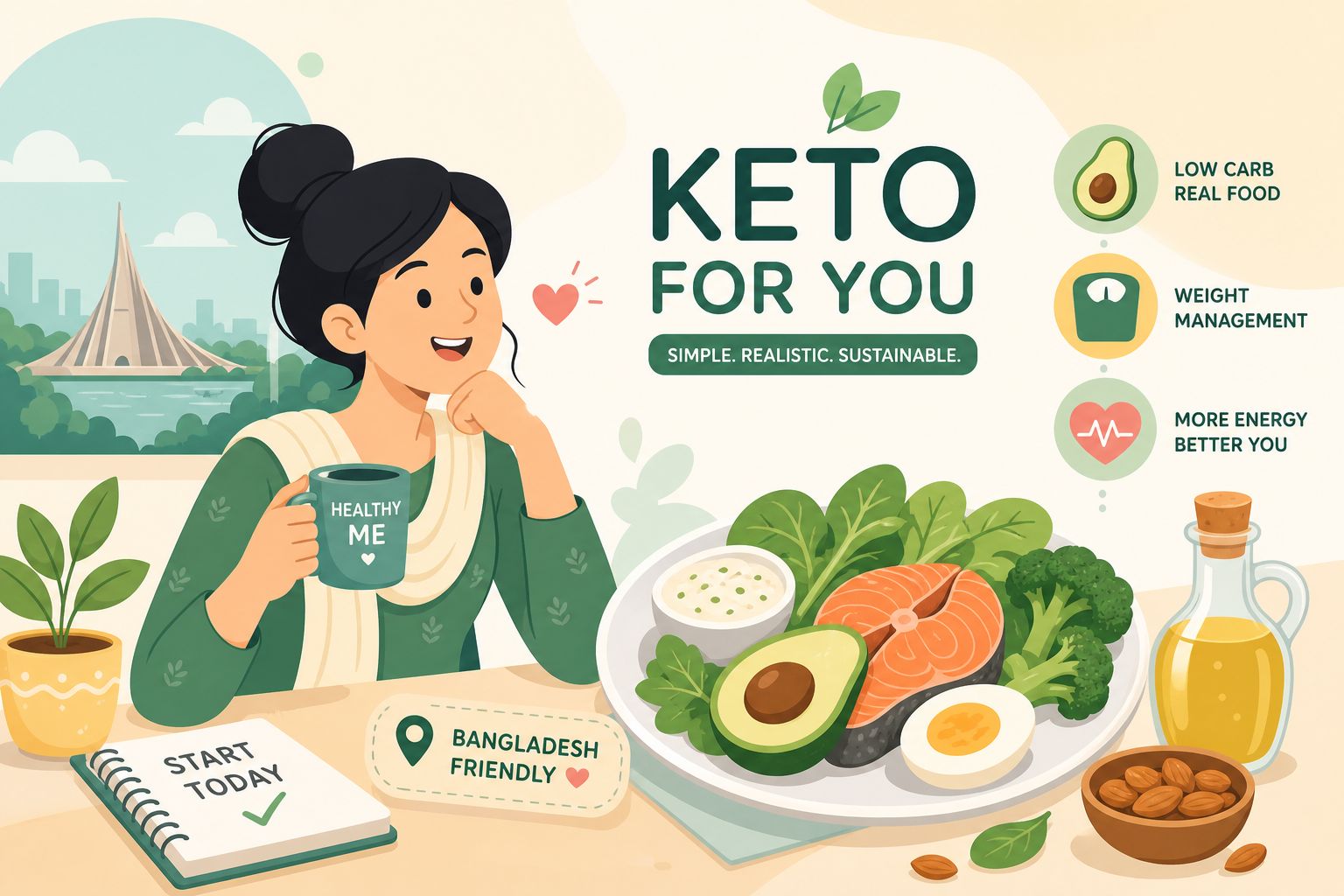
Keto diet in Bangladesh: a realistic starter guide
Posted on Jun 29, 2026
Keto is all over Bangladeshi Facebook groups and YouTube channels right now. But most advice assumes you're shopping at a specialty store: avocado, salmon, almond flour, imported butter. The reality is that starting a keto diet in Bangladesh is far more practical with local food than most people think. You just need to know which familiar ingredients already qualify and which ones to set aside.
This guide covers everything you need to start the keto diet in Bangladesh: how keto works, a keto foods list built around your local bazaar, simple dish adaptations, a 7-day sample meal plan with realistic Dhaka grocery costs, and honest guidance on side effects and when to get professional help. One important note before you begin: if you're managing diabetes, PCOS, hypertension, or any chronic condition, a diet plan built around your specific health profile is worth far more than a generic template. The certified nutritionists at ARACO HealthCare build exactly that, starting at ৳999 per plan.
What keto actually means (and three myths Bangladeshis hear first)
The core mechanic is simple. A keto diet in Bangladesh, or anywhere, drastically reduces carbohydrates, typically to under 20, 50 g per day, which forces your liver to produce ketones from stored fat, switching your primary fuel source from glucose to fat. For context, a standard Bangladeshi diet built around rice and lentils delivers roughly 120, 130 g of carbohydrates from just two similar meals. Getting into ketosis means cutting that down by 70, 80 percent.
The basics: what you eat and what you cut
The macro breakdown is roughly 70% of calories from fat, 20, 25% from protein, and only 5, 10% from carbohydrates. This is not starvation. Portion and food choice drive the results, not skipping meals. You eat filling, fatty meals; you just remove the carbohydrate-heavy components that have always been the center of the plate.
Three misconceptions that trip people up
The first misconception: keto does not mean eating only meat. Fat is the foundation of the diet, not just protein. A plate of plain grilled chicken breast with no fat source is actually a poor keto meal.
The second: you cannot eat unlimited protein. Excess protein triggers a process called gluconeogenesis, where the body converts amino acids to glucose, which can break ketosis.
The third: keto is not a crash diet. Clinical weight loss research shows meaningful results at the 12-week mark, and adherence is the single biggest variable. It works when you stick to it consistently, not when you do it for two weeks and quit.
The keto foods list Bangladesh locals already cook with
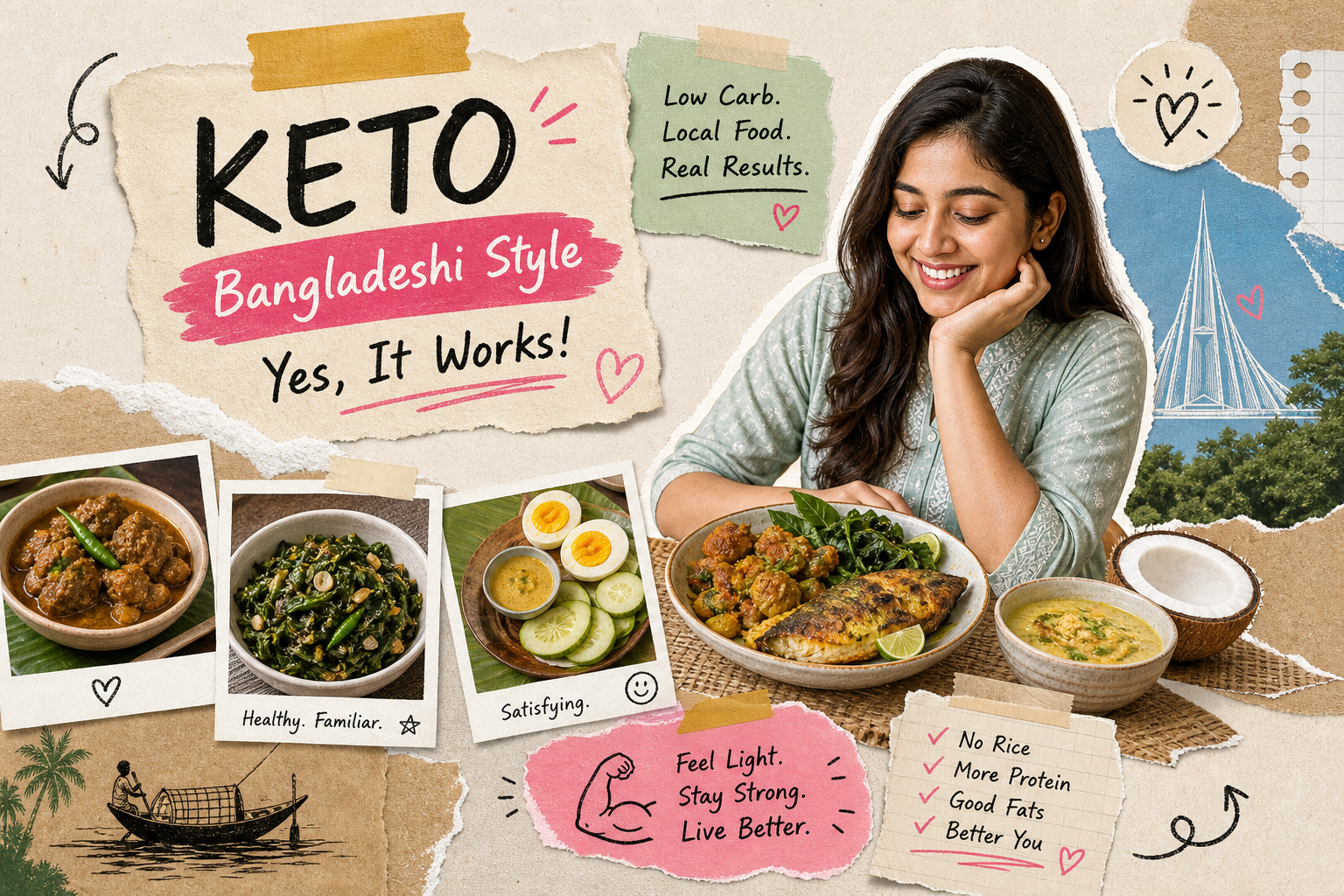
Your local market has almost everything you need. The backbone of Bangladeshi cooking, fish, eggs, mustard oil, ghee, and leafy greens, maps directly onto a ketogenic eating pattern, and this aligns with the FAO's Bangladesh dietary guidelines. The expensive imported products you see in online keto posts are optional extras, not requirements.
High-fat proteins to build your meals around
Hilsa (ilish) is one of the best keto fish you can find anywhere. At roughly 19, 22 g of fat and 22, 26 g of protein per 100 g with zero carbohydrates, it fits the macro targets perfectly. Eggs, at around ৳12 each, are the most versatile and affordable keto staple on this list. Chicken with the skin on, beef curry cuts, rui, and katla fish all work well too. Chicken runs about ৳180/kg and beef around ৳650/kg in Dhaka markets, more expensive than rice and dal, but manageable when you build meals around eggs and smaller fish.
Keto-friendly vegetables at the local bazaar
Spinach, lal shak, pui shak, cauliflower, cucumber, cabbage, and bitter gourd (karela) are all low-carb and available in any neighborhood bazar. Cauliflower is particularly important because it doubles as a rice substitute, retailing at roughly ৳60, 70/kg in Dhaka retail markets. Potatoes, sweet potatoes, and green peas are the main vegetable categories to remove entirely. They seem harmless, but a single medium potato can push you over your entire daily carb limit.
Cooking fats that fit keto perfectly
Mustard oil and ghee are both keto-compatible and already in most Bangladeshi kitchens. You do not need imported butter, specialty coconut oil from an online shop, or expensive cooking sprays. Local mustard oil and ghee cover all your fat needs at a fraction of the price, so use them freely and in quantity.
How to adapt popular Bangladeshi dishes for keto
Your existing recipe knowledge transfers almost completely. The adaptations are one or two ingredient swaps per dish, not complete reinventions. This is one of the biggest practical advantages of low-carb Bangladeshi cooking: the spices, the cooking methods, and the flavors stay the same.
Swapping rice without losing the meal
Cauliflower rice is the most practical substitute. Grate or pulse raw cauliflower into small pieces, then dry-fry it in a pan with a little mustard oil and turmeric for two to three minutes. It absorbs fish curry gravy, egg curry sauce, and chicken jhol the same way white rice does. The texture is slightly firmer and less sticky, so adjust your expectation on day one, but most people adapt within a few meals.
Keeping the curry, changing the base
Shorshe ilish, jhal fish curry, egg curry without potato, and chicken curry all remain fully keto-safe. The swap is in what you serve underneath, not in the curry itself. If a gravy needs more body, use full-fat yogurt instead of a starch-based thickener. Serve over cauliflower rice or a pile of sautéed greens and the meal is complete.
Keto snacks from a Bangladeshi kitchen
Boiled eggs, a handful of peanuts, leftover fish or chicken, full-fat unsweetened doi, and cucumber slices with mustard oil all work as quick keto snacks. None of them require imported ingredients or any preparation beyond what you'd do for a regular meal. Keep boiled eggs in the fridge and snacking becomes easy.
7-day keto diet Bangladesh meal plan with weekly grocery costs
Use this as a working template, not a rigid prescription. The goal is to show you that a full week of keto meals in Bangladesh can be built entirely from local ingredients. Adjust portions and fish varieties based on what's available and in season.
Days 1, 3: simple, low-effort meals
- Breakfast: 3 boiled eggs with sautéed spinach in mustard oil
- Lunch: Shorshe ilish with cauliflower rice
- Dinner: Chicken curry (skin on) with stir-fried cabbage
- Snack: A handful of peanuts or unsweetened full-fat doi
Rotate the fish between hilsa, rui, and katla across the three days. Swap cabbage for cucumber or karela to keep the vegetable side varied. The breakfast stays the same for simplicity during the first few days when you're still learning the pattern.
Days 4, 7: adding variety without complexity
- Breakfast: Egg bhurji cooked in ghee with green chili and onion
- Lunch: Beef curry with no-potato gravy, served with cauliflower rice
- Dinner: Pan-fried fish with sautéed pui shak in mustard oil
- Snack: Boiled egg or a small piece of leftover chicken
By day four, your body is typically past the hardest part of the adjustment. Adding beef and varying the greens keeps the plan from feeling repetitive while staying well within keto macro ranges.
Realistic grocery cost for one person in Dhaka
A week of keto groceries, covering eggs, chicken, fish, ghee, leafy greens, cauliflower, cucumber, and peanuts, typically runs ৳2,500 to ৳5,500 per person in Dhaka. A standard balanced rice-and-dal diet for the same week costs roughly ৳1,200 to ৳2,800. Keto runs about 1.5x to 2x more expensive. The gap narrows significantly when you lean on eggs, small fish, and local greens rather than beef and premium ingredients.
Side effects, warning signs, and who should not try keto
Knowing what to expect in the first week removes most of the anxiety around starting. Most side effects are temporary and manageable. A few signals, however, mean you need to stop and get medical advice rather than push through.
The keto flu: what it feels like and how to handle it
During the first week, many people experience fatigue, headaches, irritability, and mild nausea as the body depletes its glycogen stores. This is commonly called keto flu, and it usually lasts a few days to about one week. Managing it is uncomplicated: drink more water, add a pinch of salt to your meals to replace lost electrolytes, and do not cut your calories too sharply at the same time you're cutting carbs. Replacing sodium, potassium, and magnesium early in the transition reduces symptoms significantly. For practical, user-friendly guidance on recognizing and managing the keto flu, see Intermountain Healthcare's advice on the keto flu.
Warning signs that mean you should stop and see a doctor
Persistent nausea or vomiting beyond week one, heart palpitations, extreme weakness, or blood sugar readings outside your normal range are signals to stop immediately and seek medical advice. These are not adjustment symptoms. They indicate something is wrong that rest and electrolytes will not fix. Do not try to wait them out.
Who should avoid keto without medical supervision
People with kidney disease, type 1 or type 2 diabetes on glucose-lowering medication, liver disease, or a history of disordered eating should not start keto independently. The risk of hypoglycemia for those on diabetes medication is real and clinically documented; for clinical guidance on ketogenic diets and associated medical considerations, consult resources such as the NCBI's clinical overview of ketogenic therapies. Added kidney stress is also a genuine concern. This is not a reason to never try keto; it is a reason to do it with professional guidance rather than a template from a Facebook group.
When a personalized plan makes more sense than a template
A generic keto plan gets you started. A personalized plan gets you results without setbacks.
Why generic keto plans often fail in a Bangladeshi context
Most keto resources online are built around Western food assumptions and portion sizes that do not translate to a Bangladeshi kitchen. Someone managing diabetes alongside a weight-loss goal needs different macro ratios and food timing than a healthy 25-year-old cutting body fat. A one-size template often leads to either breaking ketosis unknowingly through hidden carbs or under-eating in ways that cause fatigue and muscle loss rather than fat loss. Recent clinical reviews also highlight that individualized approaches tend to produce better adherence and safer outcomes for people with complex health needs; see a recent clinical review on individualized low-carbohydrate interventions for more detail.
Getting a keto diet plan in Bangladesh built for your health profile
ARACO HealthCare's certified nutritionists offer personalized keto diet plans starting at ৳999, tailored to Bangladeshi food preferences and your specific health conditions. Whether you're managing PCOS, hypertension, or simply want to lose weight without giving up the flavors you grew up with, a plan built around your health profile is far more likely to stick than a downloaded template. Booking takes minutes online, and the consultation happens from home.
Following a keto diet in Bangladesh is genuinely achievable using local foods you already know. The core switches are clear: rice out, cauliflower rice in; ghee and mustard oil stay; eggs, fish, and chicken become the anchors of every meal. Budget for ৳2,500 to ৳5,500 per week, expect a rough first week, and use the 7-day framework above as a starting point rather than a rigid rule.
If you have an existing health condition, or if you've tried the keto diet in Bangladesh before and it didn't stick, a personalized plan from a certified nutritionist is worth the investment. ARACO HealthCare makes that accessible and affordable, so there's no reason to keep relying on advice built for a different kitchen and a different body than yours.