Lab test at home in Bangladesh: what to know before you book
Posted on Jun 17, 2026
Lab test at home in Bangladesh has moved well beyond a niche convenience. For anyone managing a chronic condition or keeping up with routine monitoring, it's become a practical alternative to the standard diagnostic centre visit. Getting a blood test in Dhaka on a weekday typically means leaving early, sitting in traffic, and waiting in a queue for something that takes the phlebotomist about four minutes. Many residents report losing half a morning this way. For tests that happen every three months, that time cost adds up fast. Home sample collection is increasingly common, with several established diagnostic providers now sending trained phlebotomists directly to your address, sealing specimens under lab-standard conditions, and delivering reports digitally within 24 to 72 hours.
Platforms like ARACO HealthCare have taken this a step further by pairing home lab test booking with doctor consultations in one place. If your physician recommends an HbA1c and a lipid profile, you book the tests and schedule the follow-up consultation without switching between apps or making three separate phone calls. By the end of this article, you'll know exactly how home collection works, what it costs, which tests are eligible, and how to book one with confidence.
How home sample collection actually works
Lab test at home in Bangladesh: how the end-to-end process works
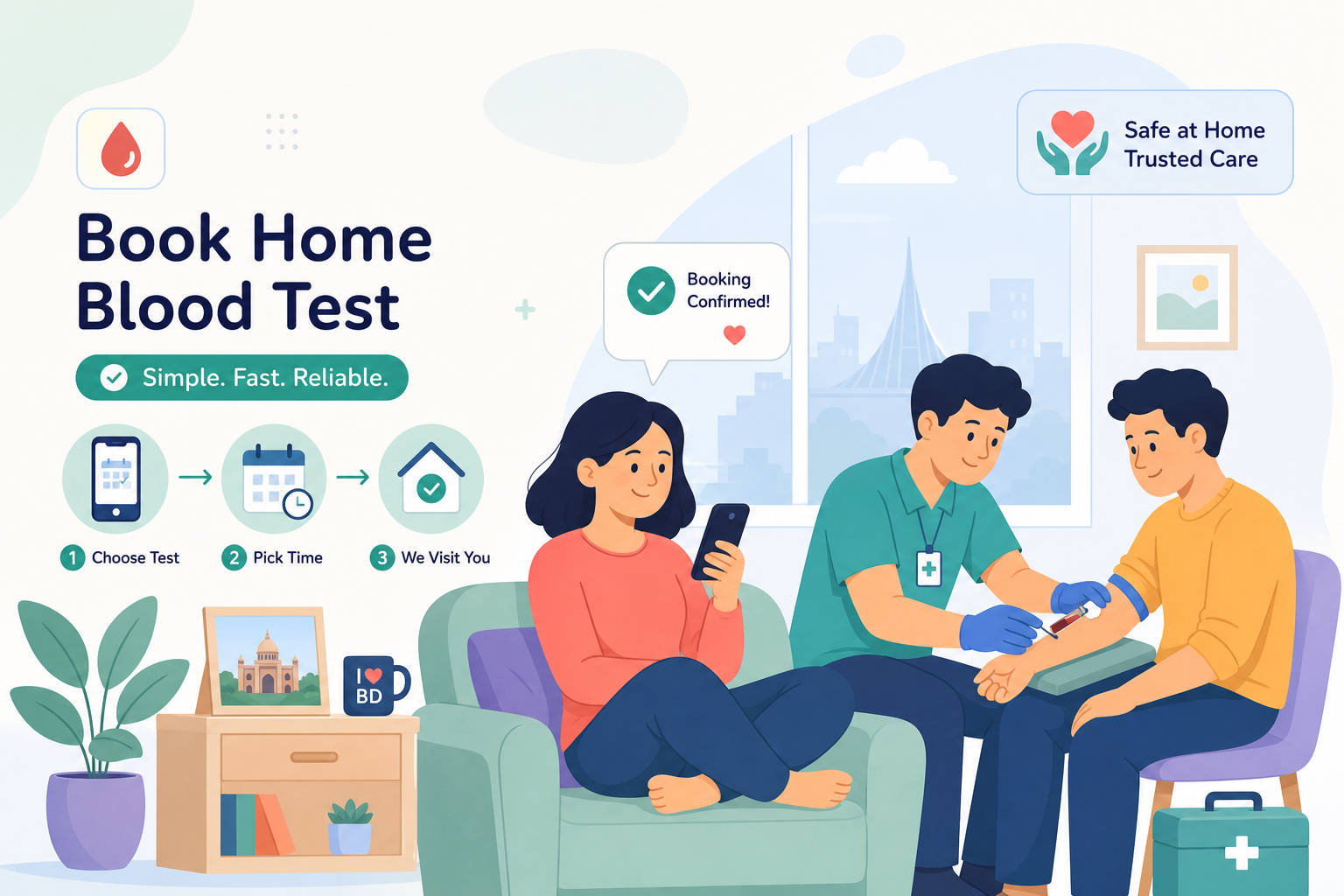
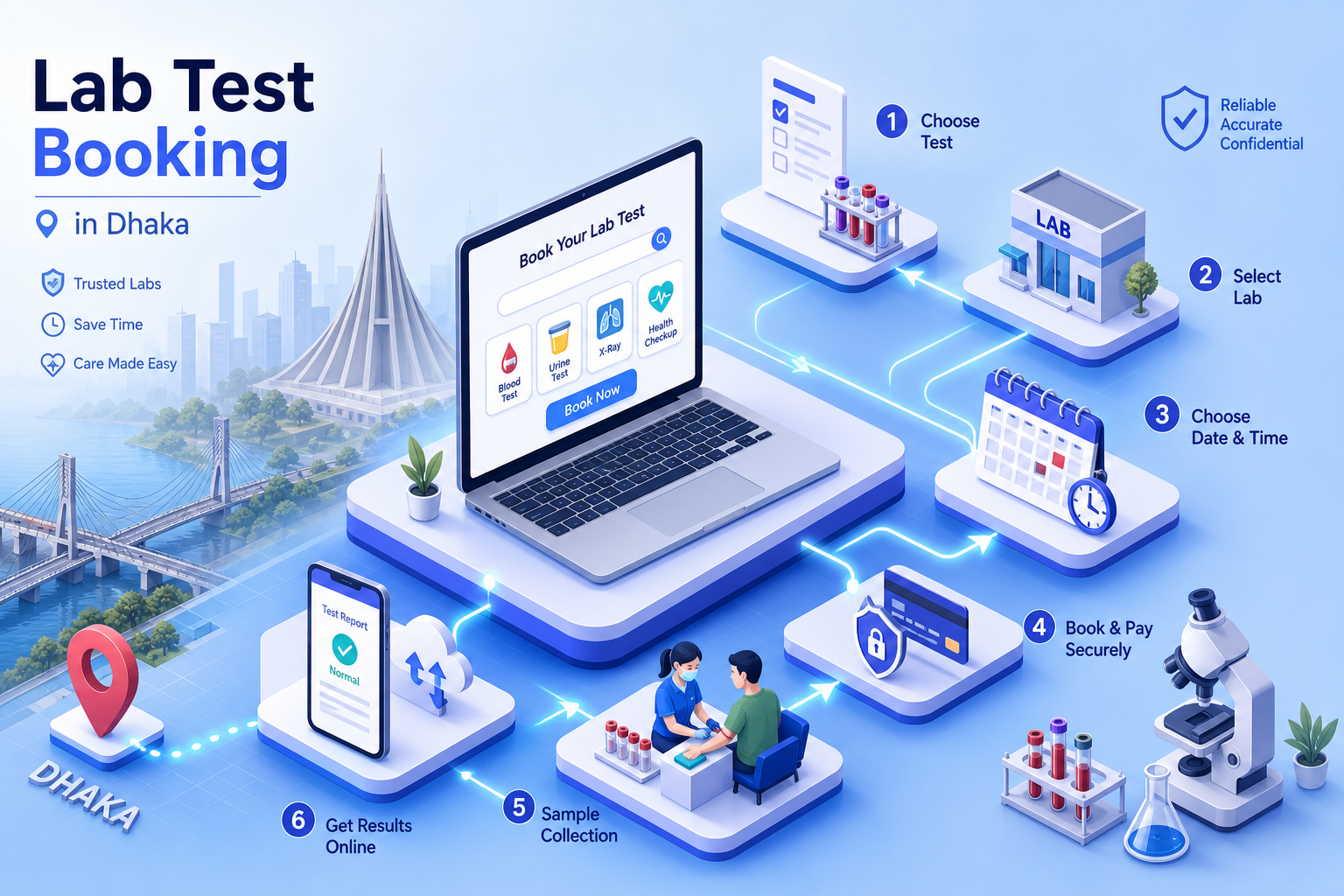
The standard workflow is straightforward. You book online or through an app, select your test or package, and pick a morning time slot (many providers offer early slots for fasting tests; confirm availability when booking). A trained phlebotomist arrives at your address at the confirmed time, collects the specimen using labeled, sealed containers, and transports it to the partner diagnostic facility for processing. Your report is delivered digitally, typically via email, WhatsApp, or a patient portal, within the agreed turnaround window. The whole process mirrors international home collection models but is built around Bangladesh's mobile-first habits and Dhaka's dense urban geography. For example, some providers advertise dedicated home health check services that bundle booking, collection, and reporting.
Who collects your sample and why their qualifications matter
Major providers in Bangladesh send trained sample collection staff for home visits, not general couriers. Praava Health's "Ghore Lab" service explicitly specifies trained phlebotomists and holds ISO 15189 certification through BAB/ILAC, the international standard for medical laboratory competence. You can read about Praava's local Ghore Lab offering and the related launch coverage in a local news announcement. Thyrocare Bangladesh and Lab Aid both carry CAP (College of American Pathologists) accreditation, recognized globally as a benchmark for lab quality. These credentials mean your sample is processed under standardized conditions with documented quality controls, rather than in an unregulated setup. Before confirming any booking, ask the provider two direct questions: are your collectors trained phlebotomists, and is the processing lab accredited?
How sample integrity is protected during transport
Some tests require careful temperature management during transport. Certain metabolic assays and some hormone tests are temperature-sensitive; confirm with your specific provider whether a given test requires cold-chain handling, as requirements vary by lab and assay. Responsible providers use sealed, insulated containers and maintain a chain-of-custody log from collection point to processing lab. Several published studies and reviews discuss specimen stability and transport considerations for blood samples, and more practical guidance is available in other analyses of pre-analytical variables (see this review). This is also the reason certain tests are excluded from home collection altogether; if a specimen isn't processed within a strict time window or handled at the right temperature, the result becomes unreliable or the test cannot be performed at all. In practice, some providers even partner with dedicated same-day logistics partners to shorten transit time, similar to commercial same-day delivery services, to protect sensitive samples.
Which tests you can (and can't) get done at home
Common tests available for doorstep collection
The tests most Bangladeshis search for are well within the scope of standard home phlebotomy. CBC (Complete Blood Count), Fasting Blood Sugar (FBS), HbA1c, Lipid Profile, TSH and broader thyroid panels, Vitamin D, Vitamin B12, and routine urine analysis can all be collected at home. These tests tolerate short transport windows and don't require immediate on-site processing. They're also exactly the tests most relevant to chronic condition monitoring: diabetes, thyroid disorders, hypertension, and cardiovascular risk. For patients who need quarterly blood work, home diagnostic services in Bangladesh can reduce the friction that leads people to delay or skip monitoring altogether.
Tests that require an in-clinic visit
Some tests can't reliably be collected at home due to special handling requirements or the need for clinical supervision. Bacterial cultures (blood, urine, wound), certain hormone assays requiring timed collection, heavy metal panels, and specialized tests that need centrifugation within minutes of collection all fall outside what home phlebotomy can safely deliver. Imaging-based diagnostics, ultrasound, MRI, ECG, and echocardiography, are facility-bound by definition. Several mobile-collection services publish explicit lists of tests ineligible for mobile in-home collection that are useful as a starting point, and regulatory updates (for example, official advisories about at-home kits) can further restrict what is permissible, note, for instance, the FDA clarification that some at-home collection kits are not authorized for certain COVID-19 tests (read the advisory). For rare exceptions or complex specimens, consult the lab before booking; a quick message or phone call saves you a wasted booking and a potentially invalid specimen. Clinical case reports and technical notes (example report) illustrate why some specimens require facility-based handling.
What home collection costs vs. walking into a lab
Price ranges for the most common tests in Bangladesh
Here's a practical look at current price ranges from Bangladeshi diagnostic providers:
- CBC: ৳400, ৳600, typical market listings and local price guides show similar ranges (see local CBC price references such asAroggaandCTGMHPL).
- Fasting blood sugar (FBS): ৳150, ৳250
- HbA1c: ৳840, ৳1,400
- Lipid profile (full): approximately ৳1,600; individual components ৳300, ৳550
- TSH (alone): approximately ৳2,000; broader thyroid packages ৳4,150, ৳6,500
Walk-in prices at the same labs are often comparable or marginally lower. Home collection adds a convenience fee, typically around ৳300, though this varies by provider and your distance from their collection zone. The net cost difference is usually smaller than people expect. For anyone who would otherwise spend ৳200, ৳400 on transport and lose two or three hours, the math often favors home collection. For consolidated price lists from diagnostic centres, see local compilations such as this diagnostic center price list.
When bundled health packages make more financial sense
Providers like IBN Sina and Thyrocare Bangladesh offer bundled health packages covering diabetes panels, thyroid checkup packages, and cardiac screening. Ordering tests as a package typically brings the per-test cost down significantly compared to booking each one separately. For a patient managing diabetes who needs HbA1c, FBS, lipid profile, and a kidney function test every quarter, a diabetes panel package usually works out cheaper than four individual home-collection bookings. That said, don't assume a package is always the better deal. Check whether it includes every test your doctor has actually ordered, not just the ones that look relevant.
Providers and city coverage to know about
Who offers at-home lab services and where
Praava Health covers Dhaka through its "Ghore Lab" service, with stated plans for expansion beyond the Dhaka metropolitan area (per their published service page and local coverage notes). You can find Praava's broader remote offerings on their remote and home services page. Dr. Lal PathLabs Bangladesh offers home collection bookable online via their book a test portal. Thyrocare Bangladesh, Lab Aid, and Farazy Diagnostic and Hospital also provide home sample pickup, see Farazy's published test and package price list for examples of local offerings. Noble Care lists home test options and sample services on their site as well (Noble Care test services). Coverage outside Dhaka is less consistent: Chittagong and Sylhet have some options, but semi-urban and rural areas depend heavily on each provider's local network. If you're outside Dhaka, confirm coverage directly before booking so you don't end up in a no-show situation on the morning of a fasting test.
Accreditations that signal a trustworthy provider
ISO 15189 means the lab meets international standards for medical testing competence and quality management. CAP accreditation is globally recognized and is held by Thyrocare Bangladesh and Lab Aid. JCI-linked accreditation applies to hospital-based labs like Evercare. One important detail: check whether the accreditation applies to the processing lab, not just the home collection arm. Your sample is collected at home but processed at a facility. The facility needs to be the accredited entity for the accreditation to actually matter.
How to book and prepare for your home lab test
Booking a lab test at home in Bangladesh, step by step
- Choose your provider or booking platform and confirm it covers your specific address.
- Select your test or package and pick a time slot (morning slots work best for fasting tests).
- Confirm the home collection fee and total cost before paying.
- Read the pre-test instructions sent by the provider carefully, including fasting duration and any medication holds.
- Prepare your NID or prescription if the provider requires it for certain tests.
- Receive the phlebotomist at the scheduled time and verify their ID and sample kit labeling before collection begins.
Pre-test preparation by test type
Skipping prep steps is the most common reason for inaccurate results or repeated tests. Here's what each major test type requires:
- Fasting blood sugar and lipid profile: 8, 12 hours of fasting; plain water is fine, but avoid tea, coffee, juice, gum, and anything else. Practical home-collection guidance and fasting protocols are reviewed in provider-facing write-ups (fasting blood test home collection) and mainstream coverage (Times of India: fasting durations). For additional local patient-focused notes, see community blogs such as thispre-test guidance post.
- HbA1c and CBC: No fasting required in most cases, but confirm with the provider since some labs specify otherwise.
- Thyroid (TSH): Ideally collected in the morning. If you take biotin supplements or thyroid medication, discuss timing with your doctor before the test, as both can affect results.
- Vitamin D and B12: Generally no fasting required, but if you're testing for deficiency levels, check with your lab or doctor about how long to hold any relevant supplements before the draw, as recommended windows vary.
Schedule your collection as early in the morning as possible so most of the fasting window happens during sleep. Stay hydrated with plain water before a blood draw. It makes the process faster and more comfortable for everyone.
Turnaround times and what to do with your results
Typical report delivery timelines
Most routine tests return results within 24 hours of sample pickup. CBC results often arrive same day or within 24 hours; HbA1c typically follows within 24 hours as well. Lipid profiles and thyroid panels generally take 24, 72 hours depending on the provider and the complexity of the panel. Digital delivery via email or WhatsApp is now standard for most providers; physical report pickup is increasingly optional. When you book, ask for a specific delivery timeline rather than assuming same-day turnaround unless the provider explicitly offers it. Some labs have invested in provider portals and operational improvements that specifically reduce order-processing time and improve turnaround, see a recent note on a provider portal that improved processing and turnaround times (provider portal case study).
What to do when your results arrive
A lab report without clinical context is just numbers on a page. If any result falls outside the reference range, the next step is a doctor consultation, not a Google search. This is where booking through a platform that pairs lab testing with medical access makes a practical difference. ARACO HealthCare connects your lab results directly to a follow-up consultation, with options starting at ৳100, so if your HbA1c comes back elevated or your TSH is abnormal, you're not starting a search for a doctor from scratch. You already have the platform, you already have the history, and you can get clinical context on your results the same day they arrive.
The practical bottom line
At-home lab testing in Bangladesh works well for most routine tests. Costs are comparable to walk-in prices once you factor in the convenience fee, and for anyone spending time and money commuting to a diagnostic centre, the gap closes even further. Accreditation matters more than brand recognition when choosing a provider: look for ISO 15189 or CAP certification at the processing lab, not just a well-known name on the booking page.
The real value isn't just saving a trip. It's making regular health monitoring realistic for people who would otherwise postpone it because a clinic visit feels like a logistical event. Quarterly blood work for diabetes management is far less likely to get skipped when a phlebotomist comes to your door. That consistency supports better long-term monitoring and may improve health outcomes over time.
If you're ready to book, ARACO HealthCare lets you schedule a lab test at home in Bangladesh and a doctor consultation in one place, no extra apps, no separate workflows. Book your tests, get your results, speak to a doctor who can interpret them. That's the whole loop, handled.