Lower Blood Pressure Naturally: A Bangladeshi Diet Guide
Posted on Jun 04, 2026
How to lower blood pressure through diet without medicine in Bangladesh is achievable for millions of people, but most don't know where to start. Around 22.8 million Bangladeshi adults aged 30 to 79 are living with hypertension right now, and only 16% have it under control. That means the vast majority are either undiagnosed, untreated, or managing it poorly. The scariest part: high blood pressure produces no symptoms. It works silently until a stroke, heart attack, or kidney failure forces the conversation.
What most people don't know is that the right food choices can lower systolic blood pressure by 5 to 11 mmHg without a single pill. That's not folk wisdom; it comes from randomized controlled trials. Platforms like ARACO HealthCare have made it easier than ever for Bangladeshis to access certified nutritionist-designed hypertension diet plans from home, so you don't need a hospital visit to start making real changes.
This guide gives you exactly what you need: which local foods to eat and avoid, specific sodium and potassium targets, practical cooking swaps, a usable 7-day meal framework, and an honest answer about when food alone isn't enough.
What the science actually says about diet and blood pressure
Before changing what's on your plate, it helps to know why it works. The evidence here is solid, not theoretical.
Why the DASH diet is the gold standard for hypertension
The original DASH feeding trial reduced systolic BP by 5.5 mmHg and diastolic by 3.0 mmHg across all participants. In people already diagnosed with hypertension, the same eating pattern reduced systolic BP by 11.4 mmHg and diastolic by 5.5 mmHg, comparable to starting a low-dose antihypertensive medication. A meta-analysis of 17 randomized controlled trials confirmed average reductions of 6.74 mmHg systolic and 3.54 mmHg diastolic from DASH-style eating. For a practical overview of the approach, see the DASH diet overview at Mayo Clinic, and for the original controlled feeding design review the DASH‑Sodium trial repository.
These are meaningful reductions, especially at stage 1 hypertension. But they're not a complete replacement for medication in everyone. More on that at the end of this guide.
The sodium-potassium relationship your doctor probably didn't explain
Most people focus only on "eat less salt," but the potassium side of the equation matters just as much. Sodium constricts blood vessels; potassium counteracts that effect by relaxing arterial walls and helping your kidneys flush excess sodium. The combination of low sodium and high potassium is what produces the largest drops in clinical trials. The DASH-Sodium trial showed reductions of up to 8.9 mmHg systolic when both strategies were applied together. Recent reporting and analysis also emphasize that boosting potassium is a key strategy for blood pressure control, particularly in populations consuming high sodium diets.
Your daily sodium and potassium targets
Sodium target: under 2,000 mg per day, which is roughly 5g of table salt. Potassium target: at least 3,500 mg per day from food, ideally closer to 4,700 mg. To put that in perspective: one cup of cooked lentils delivers roughly 731 mg of potassium, one medium banana gives you 422 to 519 mg, and a baked potato with skin provides 919 mg. On the other side of the ledger, one serving of chanachur contains 852 mg of sodium per 100g, nearly half your daily sodium limit in an evening snack.
How to lower blood pressure through diet: high-sodium Bangladeshi foods to cut first
Generic "eat less salt" advice doesn't help you make decisions at the bazaar. You need to know which specific foods are working against you.
The worst sodium offenders hiding in everyday meals
Here are the biggest culprits based on measured sodium content:
- Instant soups: up to 3,149 mg sodium per 100g, one packet can exceed your entire daily limit
- Pickles and achar: approximately 1,378 mg sodium per 100g; one spoonful at every meal adds up far faster than people realize
- Chanachur and extruded snacks: 852 mg per 100g, a very common evening snack that consistently works against hypertension management
- Instant noodles: around 915 mg per serving, often eaten as a "light" meal
- Packaged sauces and curry bases: hidden sodium that's easy to underestimate because it's already cooked into the dish
Why shutki, restaurant meals, and processed fish need attention
Shutki (dried salted fish) is a flavor staple in Bangladeshi cooking, preserved with significant amounts of salt. Even a small portion adds a meaningful sodium load to an otherwise reasonable meal. Restaurant and street food meals are nearly impossible to estimate accurately, but they're consistently high in sodium because cooks season at multiple stages of cooking.
A practical rule: if you eat out more than twice a week or use shutki daily, your baseline sodium intake is almost certainly above 2,000 mg before you add anything else to the plate. The goal isn't to eliminate these foods entirely. It's to reduce frequency and portion size while building the rest of your diet around low-sodium whole foods.
The best local foods for lowering blood pressure in Bangladesh
Everything on this list is available at any Bangladeshi bazaar and is affordable year-round.
Potassium-rich staples already in your kitchen
Masoor and moong dal are the single most accessible blood-pressure-supporting foods in the Bangladeshi diet. One cooked cup delivers around 731 mg of potassium; they're cheap, filling, and fast to cook. Bananas offer 422 to 519 mg of potassium per fruit and are available everywhere year-round.
Palang shak (spinach) gives 591 mg of potassium per cooked cup and is one of the most nitrate-rich vegetables you can eat. Sweet potato and regular potato (with skin, baked or boiled without added salt) deliver 286 to 919 mg of potassium per serving, among the most potassium-dense foods per taka spent. Affordable river fish like rui and katla contribute roughly 250 to 400 mg of potassium per 100g serving alongside heart-healthy protein.
Beetroot and leafy greens: the dietary nitrate advantage
Dietary nitrates convert in the body to nitric oxide, which directly relaxes blood vessel walls and lowers arterial pressure. Beetroot is among the most concentrated natural dietary nitrate sources available: half a cup of boiled beet delivers meaningful nitrate content alongside 259 mg of potassium. Spinach, lal shak, and other dark leafy greens are close behind for nitrate content and are far more affordable.
A simple swap with real impact: replace one side dish per day with a palang shak or lal shak bhaji, seasoned with lemon juice and cumin instead of a pickle or salted chutney. You gain potassium and nitrates; you lose a significant chunk of daily sodium.
Low-salt cooking methods that don't kill the flavor
The biggest practical barrier to a hypertension diet is the fear that food will taste flat. The Bangladeshi kitchen already has everything needed to cook boldly with minimal sodium.
Spice-based seasoning that replaces salt entirely
Panch phoron (cumin, fenugreek, fennel, black mustard, and nigella) is a zero-sodium tempering blend that gives deep, savory flavor to dals, vegetables, and fish. Use it to start almost any dish. Gorom moshla (cardamom, cinnamon, cloves, peppercorns) adds warmth and aroma at the end of cooking, which reduces the urge to reach for more salt. Bhaaja moshla adds textured depth to bhuna-style vegetables without a single milligram of sodium. The foundational cumin-coriander-turmeric base used in most Bangladeshi cooking is inherently low-sodium, problems only start when pickles, processed sauces, or heavy salting are layered on top.
Acid-based flavor boosters: tamarind, lemon, and mustard
Lemon or lime juice added at the end of cooking lifts flavor instantly and tricks the palate into perceiving saltiness. This is a technique used professionally in low-sodium cooking and it genuinely works. Tamarind pulp adds sour, rounded depth to fish curries and vegetable dishes, replacing the "savory punch" that people associate with salt. Mustard paste (kashundi) gives pungent richness to marinades and fish preparations without requiring extra seasoning.
A practical low-salt finishing formula: spice base + panch phoron tempering + tamarind or lemon + fresh coriander. That's a full flavor profile with no processed condiments needed.
A practical 7-day Bangladeshi meal plan for high blood pressure
This isn't a complicated clinical protocol. It's a template built around foods you already know, designed to keep sodium under 2,000 mg and potassium above 3,500 mg daily.
Daily sodium and potassium framework
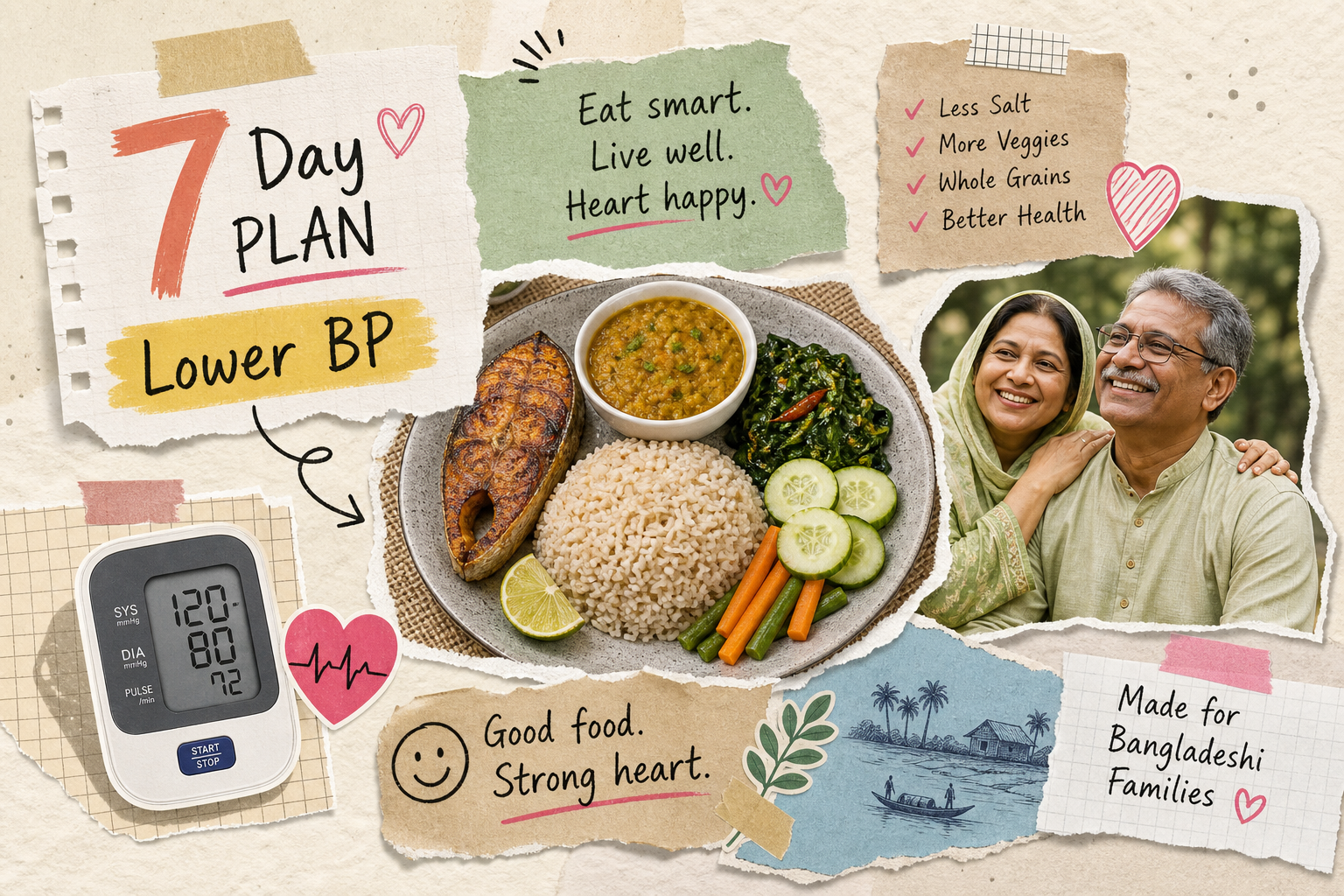
Plain rice is not the enemy. It's low in sodium and a reasonable carbohydrate base. The problem is what surrounds it: pickles, salty sides, processed fish condiments, and packaged sauces. A simple daily formula that works: rice or roti + dal + one leafy vegetable bhaji + fresh or lightly cooked fish or egg, no pickle, water or lemon water to drink. That structure gets you close to target every day without counting every milligram.
Sample daily meal structure
Use this as your repeating weekly template, varying the vegetables and dal types to keep it interesting:
- Breakfast: Ruti with egg bhurji cooked with turmeric, onion, and green chili (no processed sauce); one banana
- Lunch: Plain rice + masoor dal with panch phoron tempering + palang shak bhaji with lemon + small piece of steamed rui or katla with minimal salt
- Dinner: Rice or ruti + moong dal khichuri with vegetables (carrot, sweet potato, peas) + small cucumber and tomato salad with lemon
- Snack: One banana, a handful of unsalted peanuts, or a small bowl of boiled chickpeas with lemon and cumin
- What to drop: Achar, chanachur, instant noodles, soy sauce or packaged sauces, shutki as a daily condiment
Keeping it affordable and sustainable
Lentils, leafy greens, bananas, and potatoes are among the cheapest items at any Bangladeshi bazaar. This meal plan costs less than a standard daily diet, not more. Cook dal or khichuri in bulk, a large pot covers two meals, cuts cooking time, and removes the temptation to reach for a processed shortcut when you're tired. The 7-day structure is a template, not a rigid prescription. The key principle is high potassium, low sodium, and real food replacing processed condiments.
When diet alone isn't enough and what to do next
Dietary changes are powerful, but they have clear limits depending on your starting BP and overall health status.
Signs your blood pressure needs more than a diet change
If your systolic BP is consistently above 160 mmHg or your diastolic is above 100 mmHg, dietary changes alone are not a sufficient first-line response. You need medication alongside dietary management. Symptoms like severe headaches, blurred vision, chest tightness, or shortness of breath with high BP readings are medical emergencies, not situations for a diet experiment.
For people with existing kidney disease, diabetes, or cardiovascular disease, the sodium and potassium targets in this guide still apply but must be calibrated by a doctor, not self-managed. Stage 1 hypertension (130 to 139/80 to 89 mmHg) with no other risk factors is where dietary changes have the strongest evidence for working without medication in the short to medium term, with clinical guidelines typically recommending a 3 to 6 month lifestyle trial before adding drugs. See this AHA/Hypertension article for more on guideline-based lifestyle recommendations and thresholds for pharmacologic treatment.
How to get personalized, affordable support from home
A general diet guide gives you principles. A plan designed for your specific BP readings, food preferences, eating schedule, and budget gives you results. ARACO HealthCare offers certified nutritionist-designed hypertension diet plans starting at ৳999, built specifically for Bangladeshi patients and adapted to local foods, seasonal availability, and affordable staples. Each plan can be paired with a ৳100 doctor consultation to confirm whether your current BP levels require medication, when to retest, and how to track your progress, all from home, without a clinic visit.
Start with the kitchen, stay connected with a doctor
The steps here are straightforward: cut the high-sodium foods (pickles, chanachur, instant noodles, daily shutki), build meals around lentils, leafy greens, banana, and fresh fish, and use spice and acid instead of salt to hit your daily sodium and potassium targets. None of this requires exotic ingredients or an expensive grocery run.
How to lower blood pressure through diet without medicine in Bangladesh is genuinely achievable, and the evidence backs it up. It works best when you know your numbers, have a plan designed for your life, and check in with a doctor about what your specific readings require. If you've been managing high blood pressure on your own, explore ARACO HealthCare's hypertension diet plans for certified nutritionist guidance tailored to your food habits, budget, and health history, without leaving your home. Start with the kitchen, and your BP readings will follow.